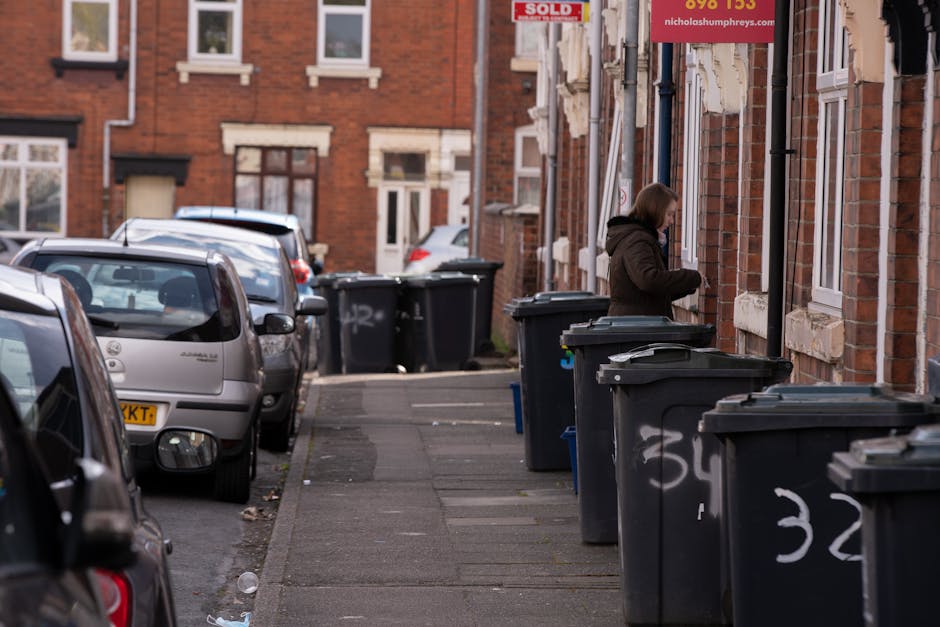
Plumstead Road Narrow Street Rubbish Removal Options
If you are trying to clear rubbish on Plumstead Road Narrow Street, you already know the awkward bit: the waste is the easy part. The access, the timing, the neighbours, the parking, the lift that never seems to work when you need it. That is where the right Plumstead Road Narrow Street rubbish removal options make a real difference. Whether you are emptying a flat, tackling builders' rubble, or shifting an office load that has quietly grown into a small mountain, the best route is the one that fits the street, the waste type, and your schedule.
This guide breaks down the practical choices, what each one suits best, and how to avoid the usual headaches. You will also find a comparison table, a step-by-step plan, a realistic example, and a checklist you can actually use. Nothing fluffy. Just the stuff that helps you get the job done without a second round of stress. Because let's face it, nobody wants to move the same pile twice.
Table of Contents
- Why Plumstead Road Narrow Street Rubbish Removal Options Matters
- How Plumstead Road Narrow Street Rubbish Removal Options Works
- Key Benefits and Practical Advantages
- Who This Is For and When It Makes Sense
- Step-by-Step Guidance
- Expert Tips for Better Results
- Common Mistakes to Avoid
- Tools, Resources and Recommendations
- Law, Compliance, Standards, or Best Practice
- Options, Methods, or Comparison Table
- Case Study or Real-World Example
- Practical Checklist
- Conclusion
- Frequently Asked Questions
Why Plumstead Road Narrow Street Rubbish Removal Options Matters
Narrow streets change everything. A property on Plumstead Road or a similarly tight road can turn a simple rubbish clearance into a logistics puzzle. Vans may need careful positioning. Skips may block access. A pile of bags left too long can annoy neighbours, attract attention, and make the frontage look untidy. And if you are dealing with shared access, flats, or a mixed residential and commercial stretch, the wrong choice can create problems before the waste is even loaded.
That is why the best rubbish removal approach is not always the cheapest or the quickest on paper. It is the one that respects the constraints of the street. For example, if you have a single room of furniture and a few black bags, a full skip is often overkill. If you have a refurbishment job with plasterboard, offcuts, and broken fixtures, a standard wait-and-load approach may be far more efficient than trying to juggle a skip permit and restricted kerb space. Simple enough in theory. In practice, the details matter a lot.
There is also a neighbour-facing side to this. On a narrow road, the process is visible. You notice when a team arrives late, blocks the pavement, or leaves debris behind. You also notice when a job is handled cleanly, quickly, and with a bit of care. Good rubbish removal keeps the street moving and the day moving too.
Expert summary: on a narrow road, the "best" waste solution is usually the one that minimises disruption, fits the access available, and handles the waste type correctly the first time.
How Plumstead Road Narrow Street Rubbish Removal Options Works
Most rubbish removal jobs follow the same broad pattern, but narrow-street jobs need more planning. The process usually starts with identifying what has to go: general household rubbish, furniture, garden waste, construction debris, appliances, business waste, or a mix of everything. Then you match the load to the method.
For a lot of local households, a general waste removal service is the most straightforward option. The crew arrives, assesses the load, carries everything out, and takes it away in one visit. For larger clearances, especially where rooms, lofts, garages, or whole properties are involved, a more specialised service can be better. If you are clearing an entire home, house clearance or home clearance may be the right fit. For smaller spaces, flat clearance often makes more sense, especially in buildings where stairways and shared corridors are part of the equation.
Timing matters too. Some services are suited to same-day or next-day collection, which can be very handy if you are between tenants, finishing a refit, or simply running out of room. Other jobs benefit from a pre-booked slot, especially if parking is tight and access needs to be coordinated with a neighbour, a site manager, or a building concierge. A little planning goes a long way. Honestly, it saves the awkward "where exactly should we put the van?" conversation.
In the background, the waste should be sorted for reuse, recycling, or disposal depending on the material. Good providers separate what can be recycled from what must be handled carefully, and that matters if you want to reduce landfill and keep the job tidy from start to finish.
Key Benefits and Practical Advantages
The main benefit of using the right rubbish removal option is obvious: the waste disappears. But on a narrow road, the real advantages go further than that.
- Less disruption: a well-planned clearance avoids blocking a busy street for longer than necessary.
- Better access control: narrow entryways, basements, stairwells, and shared hallways can be managed more safely with the right team and method.
- Faster turnaround: the right service can remove waste in one go instead of stretching the job across several days.
- Cleaner finish: proper removal leaves the property looking presentable, which is especially useful before a sale, letting, or handover.
- Lower stress: you do not have to organise lifting, loading, transport, and disposal yourself.
- More suitable for awkward items: heavy furniture, appliances, mattresses, and mixed loads are easier to deal with when the collection method is chosen well.
There is also a psychological benefit that people do not talk about enough. When the clutter leaves, the whole place feels lighter. You can hear your own footsteps again. You can see the floor. That matters if you are making space for a move, a refurbishment, or just a bit of breathing room.
If you are dealing with bulky furniture or a tired sofa that has seen better days, services like furniture clearance, furniture disposal, or mattress and sofa disposal can simplify what would otherwise be a clumsy job. For hard-to-shift items, that convenience is not a luxury. It is the whole point.
Who This Is For and When It Makes Sense
This topic is relevant to more people than you might expect. It is not just for landlords or builders. On a narrow street, a rubbish removal option becomes useful any time waste is awkward, bulky, urgent, or too much for regular bins.
You may need it if you are:
- clearing a flat before moving out
- emptying a loft, garage, or spare room
- renovating a kitchen or bathroom
- disposing of broken furniture or appliances
- removing business waste from an office or small premises
- tidying a garden after a seasonal cut-back
- sorting out a property after tenants leave behind leftover items
It also makes sense for people who simply do not want to wrestle with a skip on a narrow road. To be fair, some streets are just not skip-friendly. The space, the parking pressure, and the local traffic flow can make it more trouble than it is worth. In those cases, a collection-based service may be the smoother option.
If the job is commercial, a dedicated business waste removal arrangement can help when offices, shops, or small workspaces need regular or one-off clearance. If the waste comes from a refit or building work, builders waste clearance is usually a better fit because construction waste is heavier, messier, and often more fragmented than household rubbish.
And if you are dealing with a whole property rather than a single pile of waste, the right service may be part-clearance, part-sorting, part-reassurance. That sounds simple. It often is. Just not always on the day.
Step-by-Step Guidance
If you want the smoothest possible experience on a narrow street, work through the job in a logical order. It does not need to be complicated.
- Identify the waste type. Separate general rubbish, furniture, appliances, garden waste, construction waste, and any hazardous items.
- Estimate the volume. Think in terms of bags, bulky items, or room-by-room clearance rather than vague "a bit of stuff".
- Check access. Look at steps, hallway width, parking restrictions, gated access, and whether large items can be moved without damage.
- Decide on the removal method. Compare skip hire, man-and-van style collection, or a specialist clearance service.
- Get clear pricing. Ask what is included, what counts as extra, and whether labour, loading, or disposal are covered.
- Prepare the items. Bag loose waste, separate anything reusable, and make sure access is clear on the day.
- Arrange the collection window. If parking is difficult, choose a time that avoids peak congestion.
- Confirm special items early. Fridges, freezers, mattresses, or hazardous items may need specific handling.
- Walk through the load before departure. A quick check avoids missed items hiding in a back room or under a stairwell.
If you are unsure whether a skip is even practical, it can help to review what can go in a skip before you commit. And if the job includes white goods, a dedicated fridge and appliance removal service is often the safer, neater route.
One useful little habit: take a few photos before the clearance starts. Not for drama, just for reference. It helps if you need to check whether a cupboard, cellar corner, or back room has been fully cleared later. Small thing, big relief.
Expert Tips for Better Results
The best rubbish removal jobs are usually the ones with a bit of preparation, even if the preparation is only twenty minutes. Here are a few practical tips that make a real difference on narrow roads.
- Clear a route first. Move anything that could snag, trip, or slow the team down.
- Group items by type. Mixed piles are slower to sort and often lead to confusion on the day.
- Keep priority items near the exit. If certain pieces must go, do not bury them behind everything else.
- Protect walls and door frames. Narrow hallways can take a beating during a bulky move if you are not careful.
- Be honest about weight. A pile may look modest but still be painfully heavy. Builders' rubble especially can surprise people.
- Ask about recycling. If sustainability matters to you, choose a provider that sorts reusable and recyclable materials properly.
For homes that are packed beyond reason - we have all seen one, usually after a long winter or before a move - a broader house clearance or home clearance approach is often more efficient than trying to tackle it in tiny batches. The same is true for garages and lofts. Once those spaces start acting like storage overflow, they stop being simple rooms. They become a backlog.
If the job involves delicate or sensitive paperwork, consider confidential shredding rather than mixing documents into general waste. It is one of those things that feels like a small detail until it really, really is not.
Common Mistakes to Avoid
A lot of rubbish removal problems come from assumptions. The waste is the waste, right? Not quite. These are the mistakes people make most often:
- Choosing the wrong method for the street. A skip may be fine on a wide road and awkward on a narrow one.
- Underestimating volume. What looks like three bags can quickly become ten once sorting starts.
- Ignoring special waste. Fridges, mattresses, paint, chemicals, and electrical items need more careful handling.
- Leaving access to the last minute. If a van cannot stop nearby, the whole job slows down.
- Forgetting furniture dimensions. A sofa that fits in the room does not always fit around the stair bend. Annoying, but true.
- Not checking what is excluded. Some services do not take hazardous items or certain heavy materials without prior notice.
Another mistake is treating the quote as the only decision point. Price matters, of course it does. But if a cheaper option causes delays, extra labour, or a failed collection, it stops being cheaper. That is not a theory. It is how these jobs usually go.
Also, do not leave waste half-sorted if you can help it. A little organisation upfront tends to save a lot of awkward questions later. The crew will thank you, and frankly, so will your future self.
Tools, Resources and Recommendations
You do not need fancy kit to prepare for rubbish removal, but a few basic tools make the process easier:
- strong bin bags or rubble sacks
- tape and labels for boxing small items
- a tape measure for checking bulky furniture
- gloves for safer handling
- dust sheets or cardboard to protect floors
- a torch for lofts, cupboards, and dim corners
- a hand truck or trolley if you are moving heavier items short distances
In terms of service selection, look for clear communication, sensible collection windows, and a straightforward pricing structure. The page on pricing and quotes is a useful starting point if you want to understand how a professional provider frames the job. If you are more concerned about trust and reliability, about us, insurance and safety, and health and safety policy are the sorts of pages worth reading before you book.
Sustainability can also be part of the decision. If you prefer a lower-waste approach, take a look at recycling and sustainability. A good clearance is not just about disappearance. It is about where the material goes next.
Law, Compliance, Standards, or Best Practice
Waste removal in the UK is not something to improvise. You do not need to become a regulations expert, but you do need to stay sensible and use a provider that understands proper disposal, safe handling, and responsible transfer of waste.
As a general best practice, any rubbish removal service should be able to explain how it handles waste, whether items are sorted for recycling, and how it manages potentially hazardous or regulated materials. If something is sharp, contaminated, electrical, chemically risky, or otherwise awkward, it should be treated carefully rather than mixed into a generic load. Common sense matters here, and so does paperwork when applicable.
For householders and business owners alike, one basic rule is worth keeping in mind: do not hand waste to someone unless you are comfortable that it will be removed and dealt with properly. That includes the handling of business documents, appliances, and any items that may fall under special disposal requirements. If you are unsure, ask. A decent provider should answer without making it sound like a chore.
For business premises, good practice also includes protecting staff, customers, and access routes during collection. If you are clearing a workplace, it helps to coordinate timing, make hallways safe, and avoid leaving items where people could trip. Simple, but often overlooked.
Options, Methods, or Comparison Table
There is no one-size-fits-all answer for rubbish removal on a narrow street. The right option depends on access, volume, item type, and how quickly you need it gone. Here is a practical comparison.
| Option | Best for | Strengths | Watch-outs |
|---|---|---|---|
| Skip hire | Medium to large volumes of mixed waste | Good for ongoing projects; simple if there is space | Can be awkward on narrow roads; may need permissions or careful placement |
| Man-and-van style collection | Household rubbish, furniture, general clearances | Flexible, quick, suited to tight access | Needs accurate volume estimate; special items may cost extra |
| Specialist clearance service | Whole properties, lofts, garages, offices, mixed items | Best for complex or bulky clearances; usually more hands-off for the customer | May need a bit more scheduling and preparation |
| Targeted item removal | Appliances, mattresses, sofas, or single bulky objects | Efficient for one-off awkward items | Not ideal for larger mixed loads |
If the job is mostly furniture, a focused service such as furniture clearance can be more sensible than a general waste approach. If the waste is concentrated in storage areas, garage clearance or loft clearance may be the cleanest option. It all comes down to matching the method to the mess. That is the real trick.
Case Study or Real-World Example
Picture a typical narrow-road clearance: a two-bed flat above a small row of shops, with a staircase that turns sharply halfway up, a couple of wardrobes to remove, several bags of mixed rubbish, and a fridge that has been sitting in the kitchen doing nothing useful for months. Not dramatic, just real.
The first question is access. Can the vehicle stop nearby without causing problems? Can the bulky items be moved down the stairs without scraping walls? Is the fridge safe to handle separately? In a case like this, a single collection appointment is often better than trying to break the job into fragments over several days.
What usually works well is a short pre-visit assessment or a very clear photo-based estimate. The crew can judge the load, plan the lifting route, and decide whether the job needs general waste removal plus appliance handling. Once the collection starts, the key is order: small items first, bulky pieces next, and fragile surfaces protected where needed. By the end, the flat is clear, the hallway is passable again, and the street has not been turned into a construction site. Nice and simple, which is exactly what people want.
This kind of job also shows why specialist handling matters. A fridge is not just another item. A sofa is not just another item. A pile of mixed waste is not just another pile. The better the preparation, the smoother the day. It really does pay off.
Practical Checklist
Use this quick checklist before booking or starting your clearance:
- Have I identified the waste type clearly?
- Do I know roughly how much needs to go?
- Is access safe and wide enough for the items involved?
- Have I separated hazardous, electrical, or special items?
- Do I need furniture, appliance, or business-specific removal?
- Have I checked whether a skip would be practical on my street?
- Do I need a fixed time window because of parking or neighbours?
- Are the quote and inclusions clear to me?
- Have I protected floors, walls, and shared spaces?
- Do I have a final walk-through plan before the vehicle leaves?
If you can tick most of these off, you are in good shape. If not, pause and sort the awkward bits first. It is always cheaper in time and energy to prepare than to correct.
Get a free quote today and see how much you can save.
Conclusion
Plumstead Road Narrow Street rubbish removal options are really about fit. Fit for the street. Fit for the load. Fit for the people involved. On a narrow road, that fit matters more than it might in a wide-open driveway with loads of space to spare.
If you choose the right method, prepare the access, and keep an eye on waste type and timing, the whole job becomes calmer, quicker, and far less annoying. That is usually the difference between a messy day and a decent one. And if you have ever tried to manoeuvre a bulky item around a tight staircase in the rain, you will know exactly why that matters. One good plan saves a lot of grumbling later.
When you are ready, take the next step with a service that understands the practical side of clearance as well as the waste itself. The right help can make a cramped, cluttered situation feel manageable again, and that is a good feeling to finish on.
Frequently Asked Questions
What are the best Plumstead Road Narrow Street rubbish removal options for a small flat?
For a small flat, a collection-based service is often the easiest route because it avoids the hassle of finding space for a skip. If the job includes furniture or a few bulky items, a flat-focused service can be a better fit than general waste removal.
Is skip hire suitable on a narrow street?
Sometimes, but not always. Skip hire can work if there is enough safe space and access is manageable. On tighter roads, it may create parking and access issues, so many people prefer a collection service instead.
How do I know whether I need furniture clearance or general waste removal?
If most of what you are removing is bulky household furniture, furniture clearance or furniture disposal is usually the better choice. If the load is a mix of bags, broken bits, and general clutter, waste removal may be more appropriate.
Can appliance removal be included with rubbish collection?
Yes, often it can. Appliances such as fridges, freezers, and washing machines usually need specific handling, so it is best to mention them in advance and use a service that offers appliance removal.
What should I do with waste from building work?
Construction debris is usually better handled through builders waste clearance because it tends to be heavier, messier, and more specialised than household rubbish. Telling the provider exactly what the material is makes a big difference.
Do I need to sort my waste before collection?
It helps, but you do not always need to sort everything perfectly. Separating special items, loose rubbish, and bulky furniture makes the job smoother and can help avoid delays or extra handling.
What if I have a mix of rubbish, furniture, and old appliances?
That is very common. A mixed clearance can often be handled in one visit, but you should list everything clearly so the provider can bring the right team and plan for any special disposal needs.
How can I make rubbish removal easier on a narrow road?
Choose a collection time that avoids the busiest periods, clear the access route in advance, and keep bulky items near the exit. The less the crew has to guess, the quicker the job usually goes.
What items need extra care?
Fridges, freezers, mattresses, sofas, electricals, and anything potentially hazardous should be flagged early. Some of these items are fine for specialist collection, but they should not be treated as ordinary rubbish.
Is recycling part of rubbish removal?
It should be. A responsible provider will separate materials where possible and route recyclable waste appropriately. If sustainability matters to you, ask about recycling and sustainability before booking.
How much should I expect to pay?
Costs vary depending on waste type, access, volume, and whether special items are involved. The best approach is to request a clear quote and check what is included so you can compare like for like.
Where can I learn more before I book?
Useful starting points include pricing information, waste handling guidance, and pages about safety and disposal. Those details help you choose a service that fits your property and your load without guesswork.